Homeschool Report Card: A Practical Tool for Tracking Student Progress
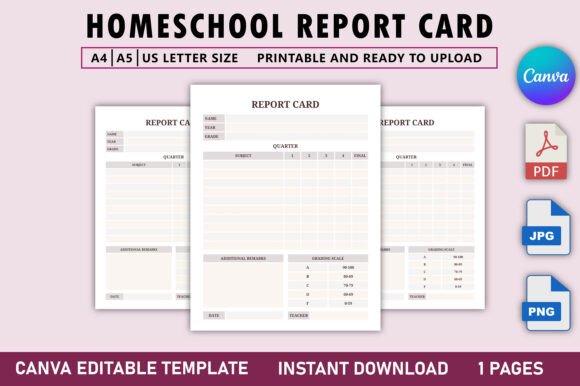
Homeschool Report Cards are essential tools for parents and educators who want to monitor student performance, provide structured feedback, and maintain records of academic achievements. These report cards offer a consistent format for evaluating subjects, grades, and overall progress, making them valuable for both formal and informal homeschooling environments. With the rise of digital tools and customizable templates, creating a report card has become more accessible than ever.
What Makes Homeschool Report Card Unique?
The Homeschool Report Card stands out due to its flexibility and ease of use. Unlike traditional school report cards, which often follow strict guidelines, homeschool report cards can be tailored to meet specific educational goals, curricula, and individual learning styles. This adaptability allows parents to focus on areas that matter most to their children’s development.
A key feature of the Homeschool Report Card is its ability to be edited and customized. Many versions, such as the Homeschool Report Card Editable on Canva, allow users to modify text, fonts, colors, and layouts to match their preferences. This makes it easy to create a professional-looking document that reflects a family's unique approach to education.
Understanding the Format and Sizes
Homeschool Report Cards come in various sizes to suit different needs. Common options include A4 (8.26 x 11.69 inches), A5 (5.8 x 8.3 inches), and US Letter (8.5 x 11 inches). Each size has its own advantages:
- A4: Ideal for detailed reports and comprehensive evaluations. Its larger size allows for more space to write notes and include additional information.
- A5: Perfect for concise summaries or quick updates. It’s portable and easy to store, making it suitable for frequent use.
- US Letter: A standard size that works well for most homeschooling families. It provides a good balance between detail and practicality.
These sizes ensure that the report card can be used in different settings, whether for parent-teacher meetings, academic reviews, or personal record-keeping.
Features of the Homeschool Report Card
The Homeschool Report Card typically includes several features that make it a versatile resource:
- 1 Page: Most report cards are designed to fit on a single page, making them easy to print and distribute.
- No Bleed: This means the design does not extend beyond the trim edge, ensuring a clean and professional look when printed.
- Canva Editable Link: Users can access and customize the template directly through Canva, offering a user-friendly interface for editing.
- Ready to Upload PDF File: Once edited, the report card can be saved as a PDF for easy sharing and printing.
- JPG, PNG Files: These formats are useful for digital submissions or online communication.
- High-Quality Design: The templates are professionally designed to ensure clarity and visual appeal.
- Tested on Amazon KDP: This indicates that the report card has been reviewed and approved for use in publishing platforms.
- Print Ready: The files are optimized for high-quality printing, ensuring that the final product looks sharp and clear.
These features make the Homeschool Report Card a reliable choice for families looking for a customizable and professional tool.
When to Use a Homeschool Report Card
A Homeschool Report Card is particularly useful in the following situations:
- Tracking Academic Progress: Parents can use the report card to evaluate how well their child is performing in each subject throughout the school year.
- Providing Feedback: The structured format allows for clear and consistent communication between parents and students about strengths and areas for improvement.
- Maintaining Records: Report cards serve as a permanent record of a student’s educational journey, which can be useful for future reference or college applications.
- Preparing for Evaluations: Some states or homeschooling organizations require periodic evaluations, and a report card can help meet these requirements.
For families who prefer a more flexible approach to education, the Homeschool Report Card offers a practical way to stay organized and informed.
Comparing Homeschool Report Card with Other Options
While the Homeschool Report Card is a popular choice, there are other options available that may suit different needs. For example, some families use digital gradebooks or spreadsheets to track student progress. Others may opt for pre-designed templates from educational websites or software programs.
One advantage of the Homeschool Report Card is its balance between structure and customization. While digital tools offer automation and data tracking, they may lack the personal touch that a handwritten or printable report card provides. On the other hand, pre-designed templates may not allow for the same level of flexibility as an editable version like the one offered on Canva.
It’s also worth considering the time and effort required to create a report card. Some families may prefer a ready-made solution that requires minimal setup, while others enjoy the process of customizing their own documents. The Homeschool Report Card strikes a middle ground by offering a professional template that can be easily adapted to individual needs.
Best Fit for Different Learning Styles
The Homeschool Report Card is especially beneficial for families who value organization and consistency. It provides a clear framework for assessing progress and setting goals, which can be helpful for both students and parents. However, it may not be the best option for every situation.
For instance, families who use a highly unschooling-based approach may find that a traditional report card feels too rigid. In such cases, alternative methods like portfolios, journals, or project-based assessments might be more appropriate. Similarly, families with multiple children may need a system that can accommodate different learning paces and styles.
Ultimately, the decision to use a Homeschool Report Card depends on the family’s educational philosophy, organizational preferences, and long-term goals.
Realistic Examples and Practical Comparisons
Consider the following scenarios to better understand when the Homeschool Report Card might be the right choice:
- Example 1: A family follows a structured curriculum and wants a consistent way to evaluate their child’s progress. The Homeschool Report Card provides a reliable format for recording grades and feedback.
- Example 2: A parent prefers a visually appealing and customizable report card that can be shared with teachers or other homeschooling groups. The Canva-editable version allows for personalization without requiring advanced design skills.
- Example 3: A family is preparing for a state-mandated evaluation and needs a professional-looking document. The Homeschool Report Card meets this requirement with its high-quality design and print-ready format.
In contrast, a family that uses a more informal or project-based approach may find that a report card is less necessary. Instead, they might rely on regular discussions, portfolios, or digital logs to track progress.
Conclusion: Making an Informed Choice
The Homeschool Report Card is a valuable resource for families seeking a structured and customizable way to track student progress. Its flexibility, professional design, and ease of use make it a practical choice for many homeschooling environments. However, it’s important to consider individual needs and educational approaches when deciding whether to use this tool.
By understanding the strengths and limitations of the Homeschool Report Card, parents can make an informed decision that aligns with their family’s goals and values. Whether used as a primary assessment tool or as a supplementary resource, it offers a reliable way to support and monitor a child’s educational journey.